How Professional Metal Fabrication Enhances Structural Strength and Longevity?
You watch a steel bracket that should have held for decades start to sag at the welds after only a few seasons. Maybe a frame you trusted is flexing under a load it was built to carry, or a panel has started to rust along the seam where two pieces meet. That gap between what metal can do and what it does almost always traces back to one thing, how the piece got fabricated. Strong metal and a strong finished part are not the same thing.
Here is the short version before we get into the why.
Professional metal fabrication adds strength and life through choices most people never see, the steel grade behind the part, the fit of every joint, the quality of each weld, and the way internal stress gets handled before the piece leaves the shop. The difference between a part that holds for twenty years and one that fails in three is rarely the raw material. It is the workmanship layered on top of it.
Why Professional Metal Fabrication Lasts Longer
The biggest factor in how long a fabricated structure lasts is not the metal you start with, it is what happens to that metal during fabrication. Two brackets cut from the same sheet of A36 steel can have very different lifespans, because every cut, bend, and weld either adds strength or quietly takes it away. Good workmanship pushes stress toward the strong areas, away from the weak ones.
Material Selection Sets the Ceiling for Strength
Strength starts long before the first cut, with picking the right metal for the job. The wrong grade underperforms no matter how skilled the welding is. Mild steel handles general framing well. Where loads run higher or fatigue is a concern, a higher strength low alloy steel earns its place. For wet or corrosive settings, 304 or 316 stainless changes the entire lifespan picture.
Thickness matters as much as grade. A frame built from material even a sixteenth of an inch too thin can flex under repeated load, and that flex works the welds loose over time. We match grade and thickness to the real conditions a part will see, not the average case, and everything after that decides how close to the ceiling the finished part gets.
Precision Cutting and Tight Fit Reduce Weak Points
Tight tolerances during cutting are one of the quietest contributors to a long lasting part. When two pieces fit together cleanly, the weld between them shares load evenly. When the fit is sloppy, with gaps of an eighth of an inch or more, the weld has to bridge that space and becomes a stress riser. Those are the spots that crack first.
Laser and waterjet cutting hold tolerances close enough that parts seat the way the drawing intended. A frame with twenty loose joints rides on a handful of overworked welds. Twenty clean joints spread the same load across all of them, and that frame lasts.
Welds Carry the Load, So Weld Quality Matters Most
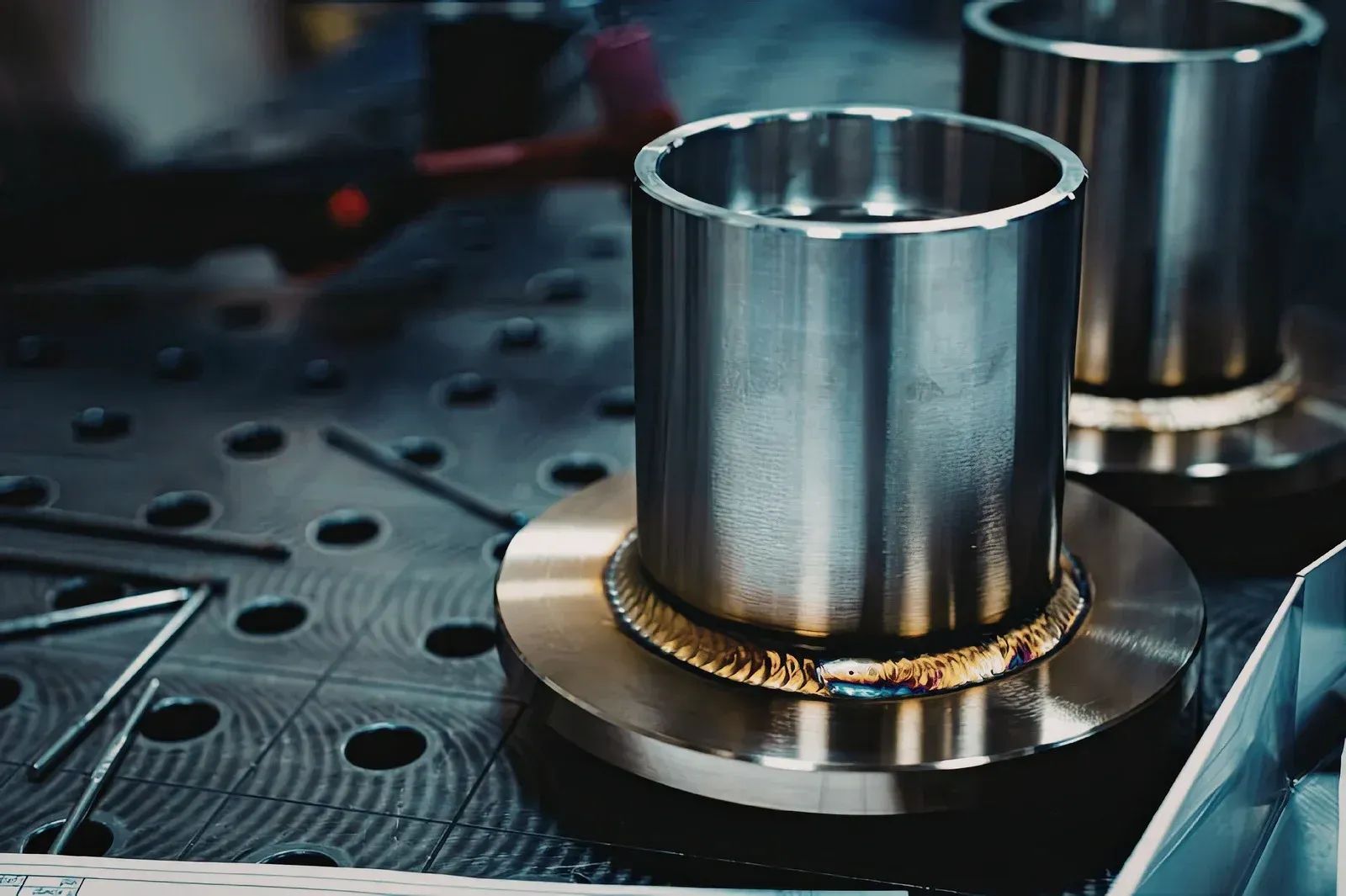
A weld is usually the first place a fabricated part fails, which makes weld quality the core of structural strength. A good weld fully fuses the base metals so the joint behaves like one continuous piece. A poor weld only looks connected. Underneath, you find cold lap, porosity, or shallow penetration that leaves the load riding on a thin skin of metal.
Heat control is where skill shows. Too little and the weld never fuses to the root. Too much and you burn away material and weaken the zone around the joint. On thicker sections, we preheat the steel so it cools slowly and skips the brittle, crack prone structure fast cooling creates. None of this shows on the surface, which is exactly why it gets skipped on cheaper work.
Forming and Load Paths Build Strength Into the Shape
The shape of a part does as much for strength as the metal itself, and proper forming builds that strength in. A bent gusset or a folded edge stiffens a panel far more than adding thickness would. But bends have rules. Bend a steel too tight, below its safe radius, and you crack the outer fiber right where the load concentrates.
We work to bend radii the material can take without cracking, usually keeping the inside radius at or above the metal thickness for mild steel. Where a joint sees heavy or shifting load, a gusset plate spreads that force across a wider area instead of piling it onto one weld and the surrounding metal. Good fabrication is partly geometry, sending load away from the edges where failure starts.
Stress Relief and Finishing Decide the Long Game
How Local Humidity and Sandy Soil Change the Approach
Frequently Asked Questions
Does professional metal fabrication really last longer than basic welding?
Yes. Professional fabrication controls steel grade, joint fit, weld penetration, and finishing, all of which decide how long a part lasts. Basic welding only joins metal together. It skips the stress relief and corrosion protection that keep a structure holding strong for decades instead of a few seasons, and that missing step is usually what causes failure in the field.
What makes a weld strong or weak?
A strong weld fully fuses the base metals so the finished joint behaves like one continuous piece of steel. Weak welds hide cold lap, porosity, or shallow penetration where the metals never truly bond. Heat control, matched filler metal, and preheating thick sections separate a weld that holds for years from one that cracks open under load far too soon.
Why does fabricated steel rust at the welds first?
Welding creates a heat affected zone around the joint where the grain structure of the metal changes and corrodes faster than the surrounding steel. If the protective finish gets skipped or worn thin at that exact spot, moisture finds it and attacks there first. Sealing carefully over every weld and edge is what prevents this early rusting from ever starting.
Can I tell good fabrication from poor work just by looking?
Sometimes. Clean even welds, tight joints with no visible gaps, and a smooth uniform finish are all good signs of careful workmanship. But the real strength sits underneath, in the weld penetration and stress relief you simply cannot see from outside. A neat looking part can still hide weak fusion right at the root, the exact place where failure begins.
How does the local climate affect how my metal parts should be built?
In humid, sandy conditions, moisture clings to bare steel far longer than it does in dry regions, so corrosion protection becomes the factor that decides lifespan. We often choose galvanized or stainless stock and apply heavier coatings on anything built for outdoor use here. Skip that step and unprotected welds can rust through within just a couple of short seasons.
Experienced Fabricators Who Build Parts Made to Last
When you need fabrication built to hold up under real loads and real weather, Savant Industrial Products & Services
brings 13
years of hands on metalwork to every part we make. We serve Seven Lakes, North Carolina and the surrounding communities. Send us your drawings or your problem, and we will build it to last.