Welded Fabrication vs. CNC Machining: How to Choose the Right Process for Your Metal Part
Stress Relief and Finishing Decide the Long Game
Material Selection Sets the Ceiling for Strength
Strength starts long before the first cut, with picking the right metal for the job. The wrong grade underperforms no matter how skilled the welding is. Mild steel handles general framing well. Where loads run higher or fatigue is a concern, a higher strength low alloy steel earns its place. For wet or corrosive settings, 304 or 316 stainless changes the entire lifespan picture.
Thickness matters as much as grade. A frame built from material even a sixteenth of an inch too thin can flex under repeated load, and that flex works the welds loose over time. We match grade and thickness to the real conditions a part will see, not the average case, and everything after that decides how close to the ceiling the finished part gets.
How Local Humidity and Sandy Soil Change the Approach
Quick Answer: Welded fabrication builds parts from plate, tube, bar, and sheet stock joined with controlled heat input — the right call for structural frames, housings, brackets, and large assemblies. CNC machining removes material from a solid workpiece to hit tight tolerances on bores, mounting faces, and threaded features. Most real-world industrial components need both: a welded or formed structure with machined features layered on top for the surfaces that actually have to be precise. The question isn't which process wins — it's which surfaces on your part actually require which capability.
If you've ever handed a drawing to a shop and gotten back two different quotes — one for welding the part up from plate and structural stock, one for machining it from solid bar — you've run into a decision every design engineer eventually faces. The part hasn't changed. The manufacturing approach has, and that choice affects cost, lead time, and how the finished component holds up under load.
There isn't a single right answer here. There's a right answer for your part's geometry, your volume, and which surfaces actually control fit and function. Picking the wrong process usually shows up later — as a part that's overbuilt and too expensive, or one that looks fine on paper but can't hold the tolerance a mating component demands.
What Each Process Is Actually Good At
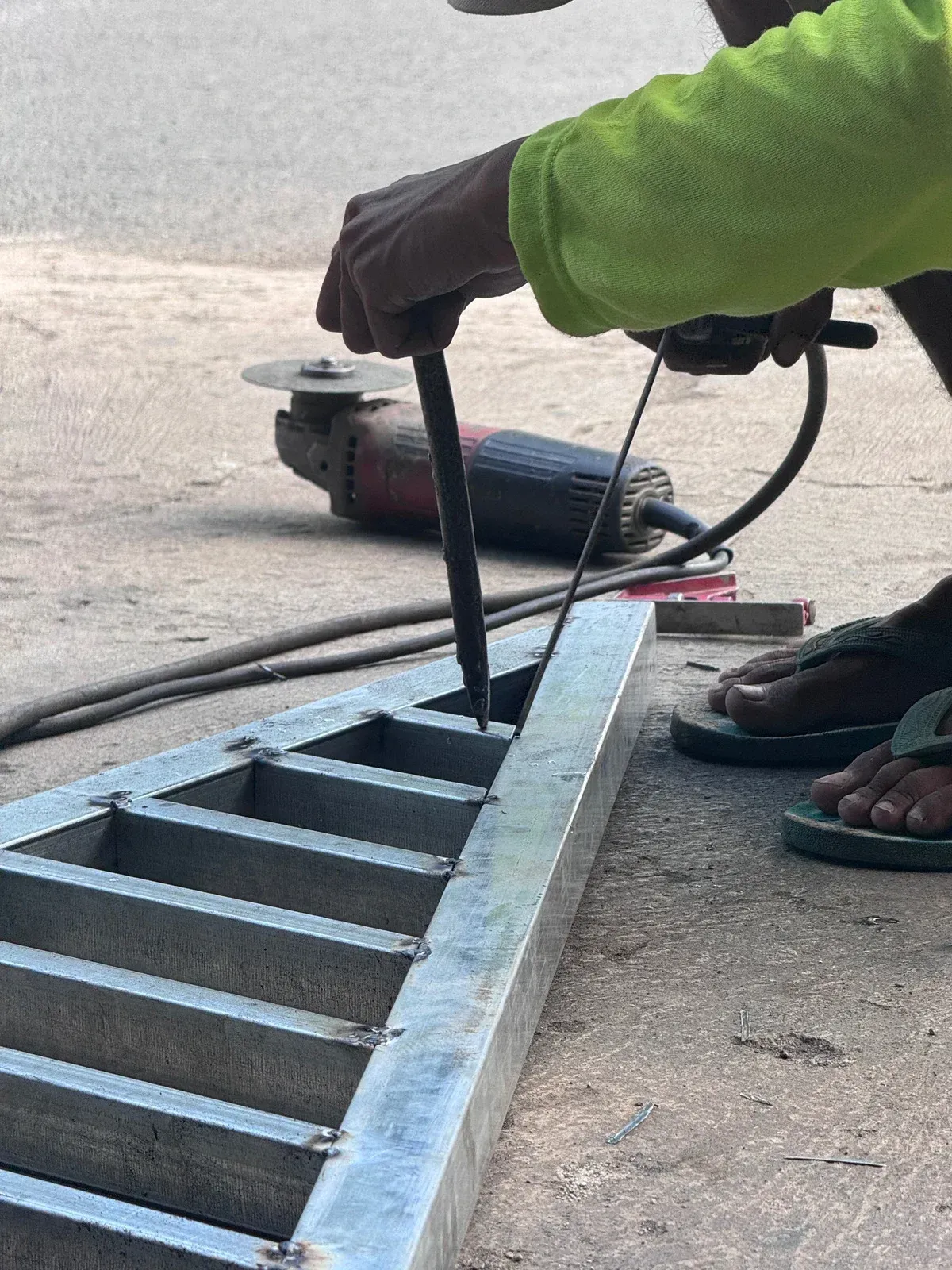
Welded fabrication builds a part from standard material forms — plate, tube, bar, angle, or beam — cut to shape and joined with controlled heat input. It's the natural choice when a component is large, structural, or built as an assembly rather than machined from a single block. Frames, equipment housings, brackets, guards, and platforms are classic fabrication work because the part needs strength and size more than tight tolerance across every surface.
Precision sheet metal fabrication is a related but distinct capability worth separating out. CNC cutting, bending, and forming of thinner-gauge stock produces enclosures, panels, and lightweight housings where dimensional stability and edge quality matter more than the raw structural mass a thicker structural weldment carries. If your part is closer to a cabinet or a cover than a load-bearing frame, it's a sheet metal job before it's a structural fabrication job, and that distinction changes both tooling and cost.
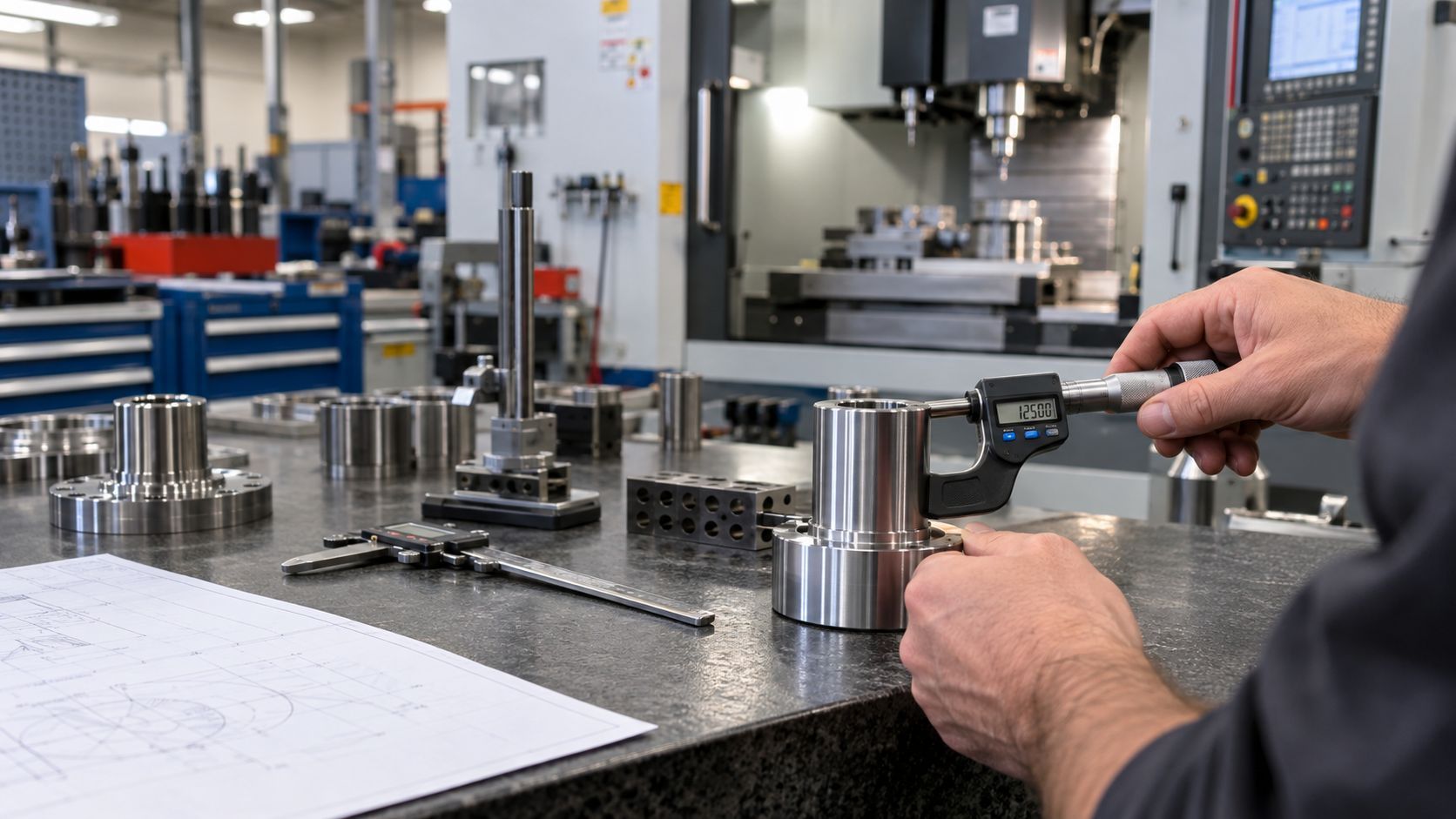
CNC machining removes material from a solid workpiece — bar stock or a fabricated blank — until the part hits its required dimensions and finish. Machining earns its keep on features that have to line up precisely: bearing seats, bolt patterns, flat mounting faces, threaded holes, and bores. If a small dimensional error would cause vibration, leakage, misalignment, or premature wear, that feature almost certainly needs to be machined rather than welded or formed to size.
The Questions That Actually Decide It
Is the part structural, or is it precision? A frame that just needs to hold weight and resist vibration is a fabrication problem. A component with bearing bores, sealing faces, or bolt patterns that have to line up within a few thousandths is a machining problem. Most parts are actually both, which is why the more useful question is which specific surfaces fall into which category — not which single process the whole part should use.
Where does the load actually concentrate? Welded joints are potential weak spots precisely because they're joints — the base metal on either side of a weld is usually stronger than the weld itself, especially under cyclic or vibration loading. Machining doesn't add that risk since nothing is joined. If a part will see continuous vibration or repeated load cycles near a weld, that joint deserves engineering attention beyond just meeting a visual inspection.
How many are you making, and how fast? A one-off or low-volume run almost always favors fabrication or a fabricated-plus-machined hybrid, since there's no tooling investment to spread across the run. Prototype and limited-run fabrication also lets you validate fit and function before committing to a production tooling path, which matters more the more complex the assembly gets.
Which surfaces actually need to be precise? This is the question that gets skipped most often, and it's the one that saves the most money when it isn't. Very few parts need tight tolerances everywhere. A fabricated base plate with machined mounting pads, or a welded housing with a machined bore, gets the strength of one process and the accuracy of the other — without paying to machine an entire part from solid stock or to hold impossible tolerances across a full welded structure.
Tip: Separate your drawing into critical and noncritical dimensions before you send it out for quotes. Flagging which surfaces control fit, alignment, or sealing — versus which ones just need to be structurally sound — lets a shop quote a combined fabrication-and-machining approach instead of defaulting to the most conservative, most expensive process across the whole part.
Where Welding Distortion Changes the Plan
Heat input during welding moves metal. Even with controlled procedures, a large fabricated assembly can shrink, twist, or bow slightly as welds cool, which is why critical surfaces on a welded structure are typically machined after fabrication rather than before. Heat-affected zones carry locked-in stress that can shift a part's final dimensions in ways a drawing alone won't predict.
That's not a reason to avoid welded fabrication — it's a reason to sequence the work correctly. A frame gets welded first, stress-relieved if needed, and then the mounting faces, bores, and bolt patterns get machined afterward, once the structure has settled into its final shape. Trying to hold tight tolerances on a fabricated part before it's welded is a common and avoidable mistake, and it's one of the main reasons welded-then-machined workflows exist as a standard practice rather than a workaround.
Cost Drivers Are Different for Each Process
Machining costs scale with machine time, tooling, setup, and how much material gets turned into chips along the way. A part that starts as a large block and ends up much smaller is expensive not because machining is inherently costly, but because the shop is billing for both the material removed and the time it took to remove it.
Fabrication costs scale with weld time, fit-up accuracy, and finishing — grinding, blasting, or coating a welded assembly can add up fast if the design calls for a lot of joints or a clean cosmetic finish. Sheet
metal work scales differently again, driven more by programming, bend complexity, and piece count than by raw material removal.
Warning: Don't let a part's drawing hold uniform tight tolerances "just in case" if only a few features actually need that level of control. Over-tolerancing a fabricated part is one of the most common ways a quote comes back far higher than the design actually requires — and it usually happens because nobody went back through the drawing to separate what matters from what doesn't.
When Machined-Fabrication Integration Is the Right Call
Most industrial components that need both strength and precision end up combining fabrication and machining in a single build, and that's not a compromise — it's usually the smartest path. A welded frame with machined mounting pads gets its structure from fabrication and its accuracy from machining. A formed sheet metal enclosure with machined cutouts and hardware bosses gets a clean, lightweight structure with exactly the tolerance the mating hardware requires. A structural weldment with a final machining pass on the bearing bore gets the size and strength of a fabricated part with the precision of a machined one.
The mistake to avoid is forcing an entire part into one process because it's simpler to quote that way. A design that's mostly structural doesn't need to be machined from solid stock just because a few features require tight tolerances, and a design that's mostly precision features doesn't need full fabrication just because it's large. Matching the process to the feature, not the whole part, is where the real savings and reliability gains come from — and it's exactly why integrated fabrication-and-machining workflows exist as their own capability rather than two separate vendors handing a part back and forth.
Frequently Asked Questions
How do I know if my part needs post-weld machining?
If a surface mates with another component, seals against something, or needs tight alignment, machine it after welding. Welding heat can shift dimensions slightly, so critical surfaces are safer machined once the structure has settled.
What's the real difference between structural fabrication and sheet metal fabrication?
Structural fabrication uses thicker plate, tube, and bar stock for load-bearing assemblies where joint strength matters most. Sheet metal fabrication uses thinner-gauge material for enclosures and housings, prioritizing dimensional consistency and finish quality.
Can a prototype help me decide between fabrication and machining before I commit to production?
Yes. A limited-run prototype lets you validate fit, strength, and hybrid performance before committing to production tooling. It's a lower-risk way to catch tolerance or fit issues before they become production problems.
What happens if I choose fabrication for a feature that really needed to be machined?
The feature may fall outside tolerance, particularly near a welded joint where heat distortion has the most effect. That usually means rework, added machining afterward, or a redesign, all costing more upfront.
Does material choice change which process makes sense?
It can. Some alloys weld more predictably than others, and material behavior under heat affects how much post-weld machining a joint needs. It's worth discussing alloy behavior before the drawing is finalized.
Is it worth machining a part that started as a weldment, or should I just machine it from solid stock?
It depends on geometry. Large, mostly structural parts are usually cheaper welded and finish-machined than machined entirely from solid stock. Smaller, geometrically complex parts with tight tolerances throughout may be more efficient machined from solid.
Optimize Performance with the Right Manufacturing Strategy
A part's manufacturing process isn't a formality that happens after the design is done — it's part of the design itself. The engineers who get the best results treat welded fabrication and machining as two tools in the same kit, not two competing options to pick once and never revisit. Knowing which questions to ask — structural or precision, where the load concentrates, what volume you're really building, and which surfaces need to be exact — turns that decision from a guess into an engineering call you can defend.
Send us your drawing or sample before you commit to one manufacturing process.
Savant Industrial Products & Services, based in Seven Lakes, North Carolina, works across structural and sheet metal fabrication, welded assembly manufacturing, and CNC machining, and can help you evaluate whether an integrated fabrication-and-machining approach saves cost and improves reliability for your specific part. With 13 years of experience, and in-house capability across fabrication, precision machining, reverse engineering, and 3D printing, our team can walk your design feature by feature and tell you where tight tolerance actually matters and where it doesn't. Reach out to talk through your part's requirements and get a straight answer on the right approach.